
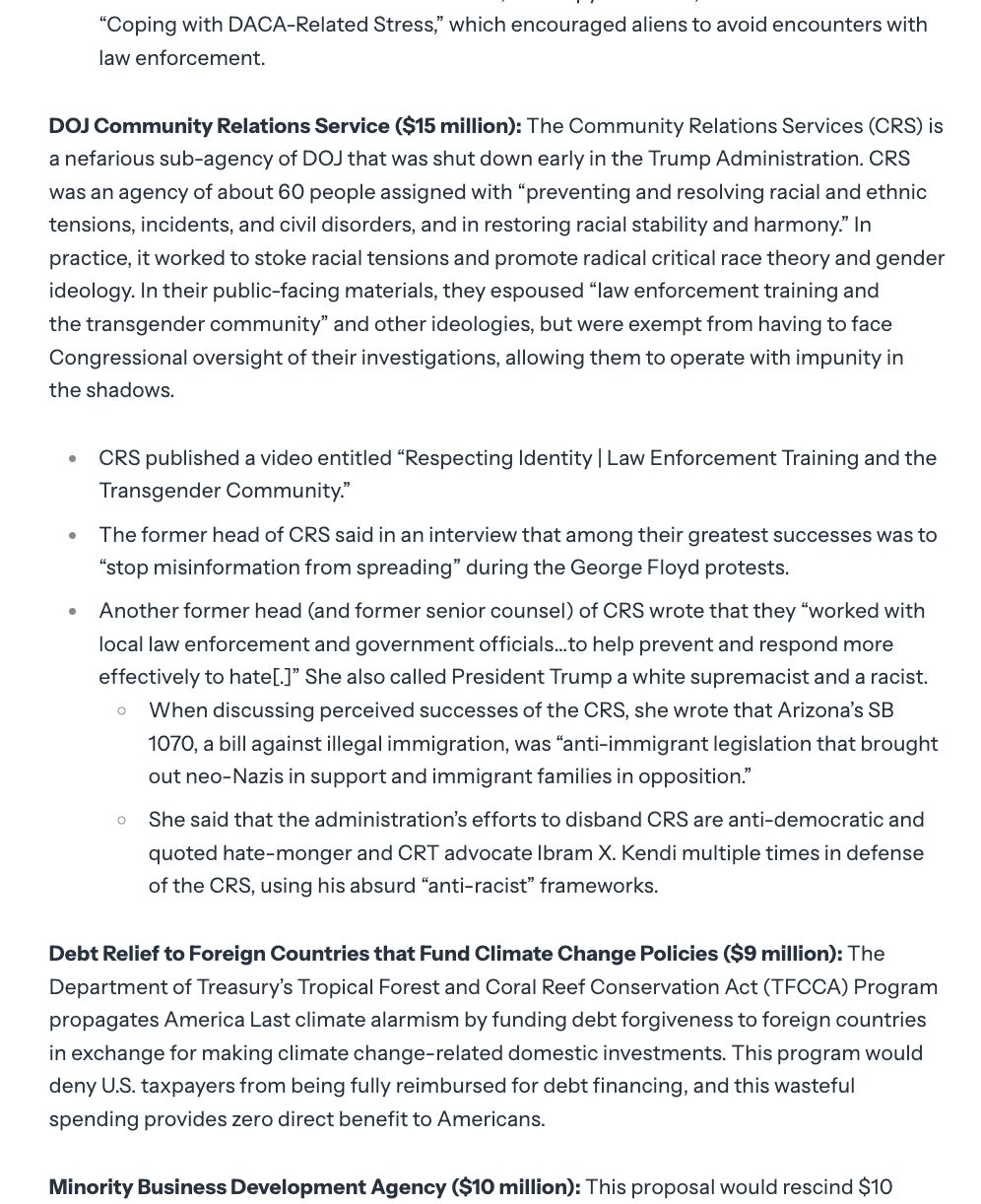
Congress Must Reject White House’s Spurious Attacks Against CRS and Illegal “Pocket Rescission” of Appropriated CRS Funds
Yesterday, the Trump Administration's launched yet another attack on the Community Relations Service and has attempted to effectuate “pocket rescission” of funds appropriated for CRS -- all based on spurious, deliberately false, and utterly irresponsible accounts of CRS’s history, mission, and work. As lawmakers of both parties have already decried, the Administration's actions are illegal and represent another abuse of power and attack on Congress's authority. Congress must reject the Administration's lawless actions in toto.
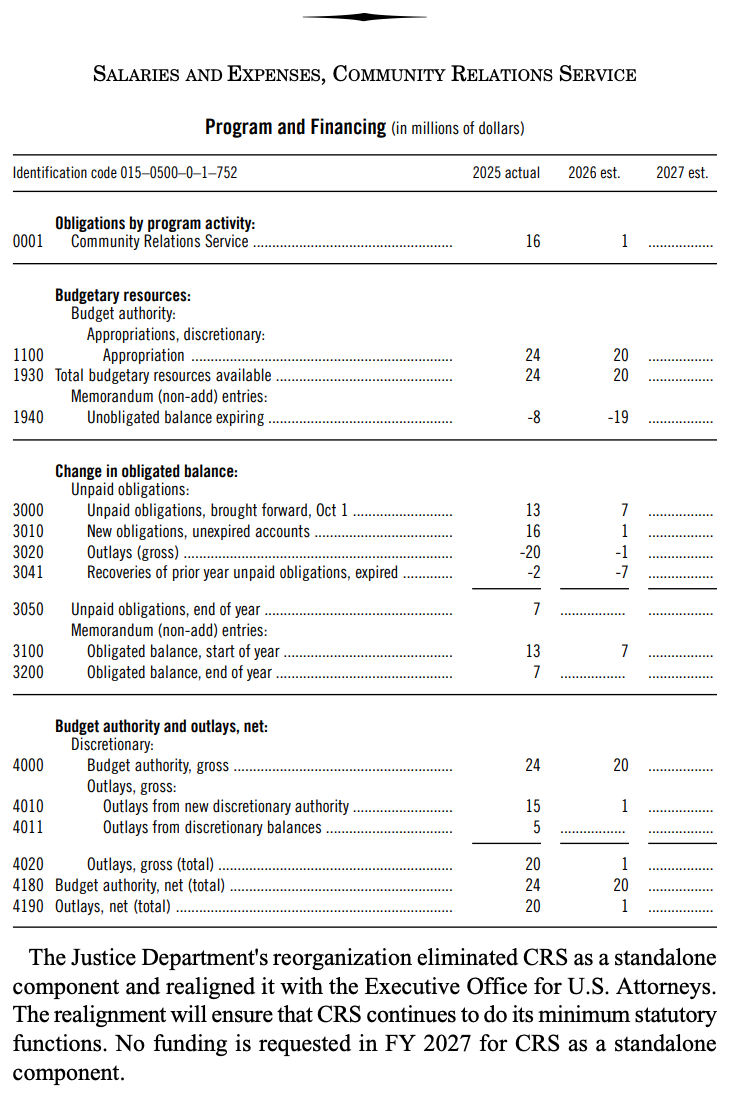
Congress Must Reject White House’s Proposal to Defund CRS in FY 2027 and Remove of CRS from the Civil Rights Act of 1964
The White House’s budget request for FY2027 as to the Community Relations Service is based on fiction, fantasy, and falsehood. The call for statutory dissolution and defunding of CRS demonstrates a fundamental misunderstanding of CRS's history, mission, and absolutely necessary work to advance DOJ's mission to "fight crime and protect American communities" (as correctly summarized by the WH).
The WH says DOJ's top priority is to reduce violent crimes. That is core to CRS's mission, and CRS has successfully fulfilled it over six decades.
Thus, nothing can be further from the truth than the White House's so-called justification: "CRS has a long track record of supporting fringe leftist organizations such as Black Lives Matter and legitimizing riotous behavior that puts America’s police in the crosshairs." This is patently false and relies on conspiracy-theory-driven internet fantasies about CRS's work.

The Fight to Restore the Community Relations Service and the Future of Civil Rights Mediation
On April 15, 2026, former Community Relations Service component head Julius Nam met with the Pennsylvania Human Relations Commission as part of its “Diversity Speaks” series regarding CRS’s history since 1964, its dissolution in 2025, and the litigation and advocacy work to restore CRS.
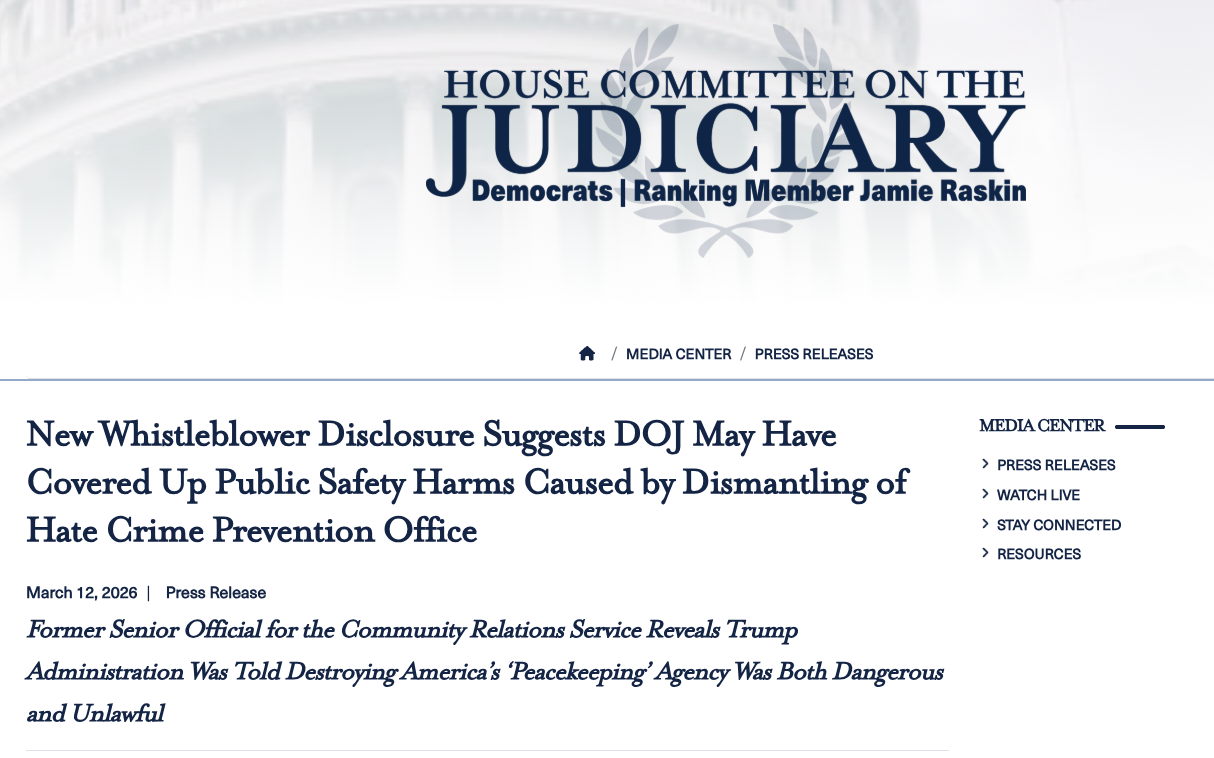
Rep. Jamie Raskin Announces “New Whistleblower Disclosure Suggests DOJ May Have Covered Up Public Safety Harms Caused by Dismantling of Hate Crime Prevention Office”
On March 12, 2026, Rep. Jamie Raskin, Ranking Member of the House Judiciary Committee, wrote to Attorney General Pam Bondi demanding that she immediately address a whistleblower disclosure provided regarding Community Relations Service—revealing that DOJ appears to have misled a federal court by failing to turn over internal warnings that dismantling CRS was legally indefensible and operationally impossible.
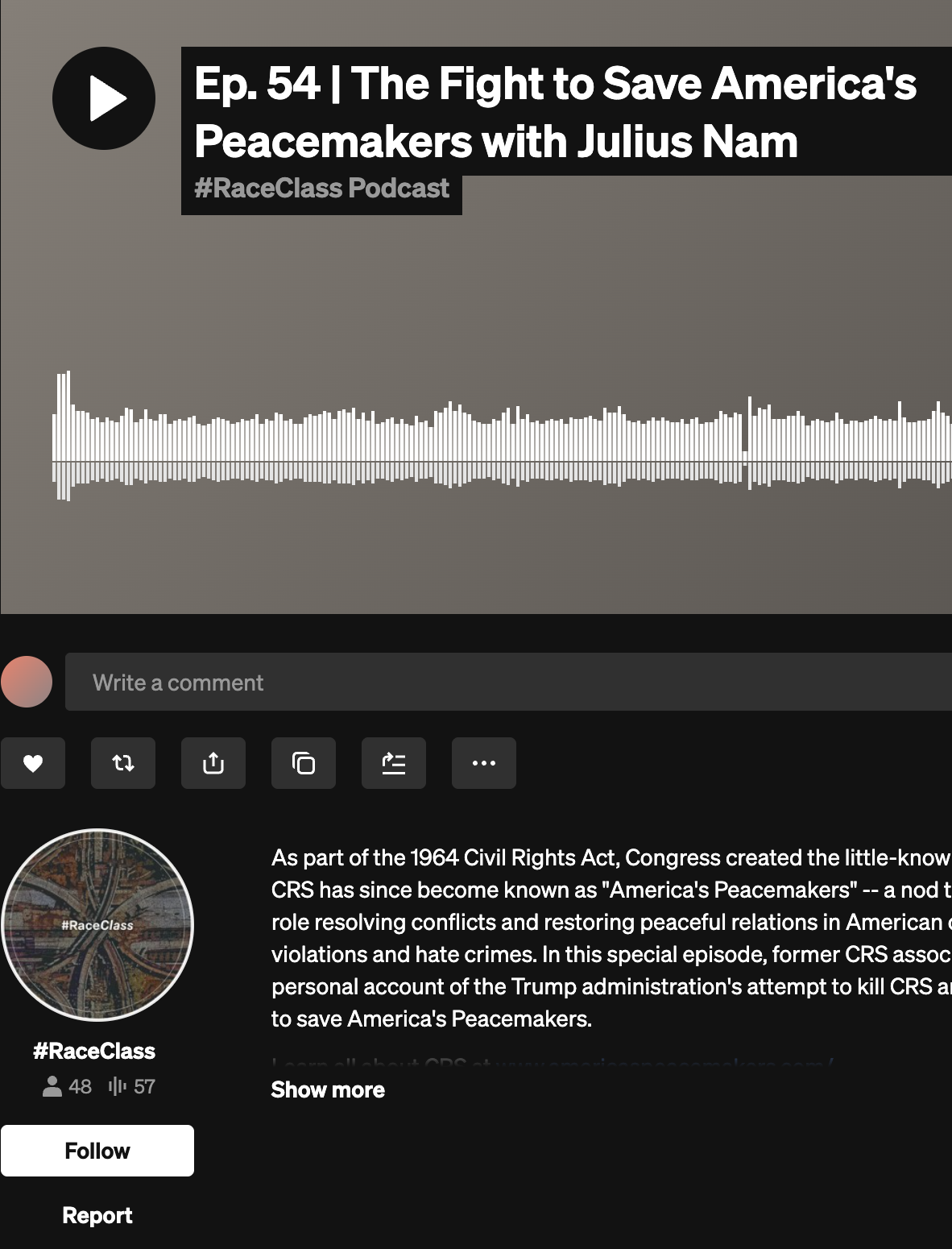
#RaceClass Podcast Covers the Fight to Save America’s Peacemakers
On January 17, 2026, Jonathan Feingold, professor of law at the Boston University School of Law, published an interview of Julius Nam, former component head of CRS, on Feingold’s podcast, #RaceClass. The interview ranged from recent efforts to restore CRS, the history and statutory mission of CRS, and Nam’s his firsthand perspectives on the Trump Administration’s approach to civil rights and efforts to eliminate CRS.
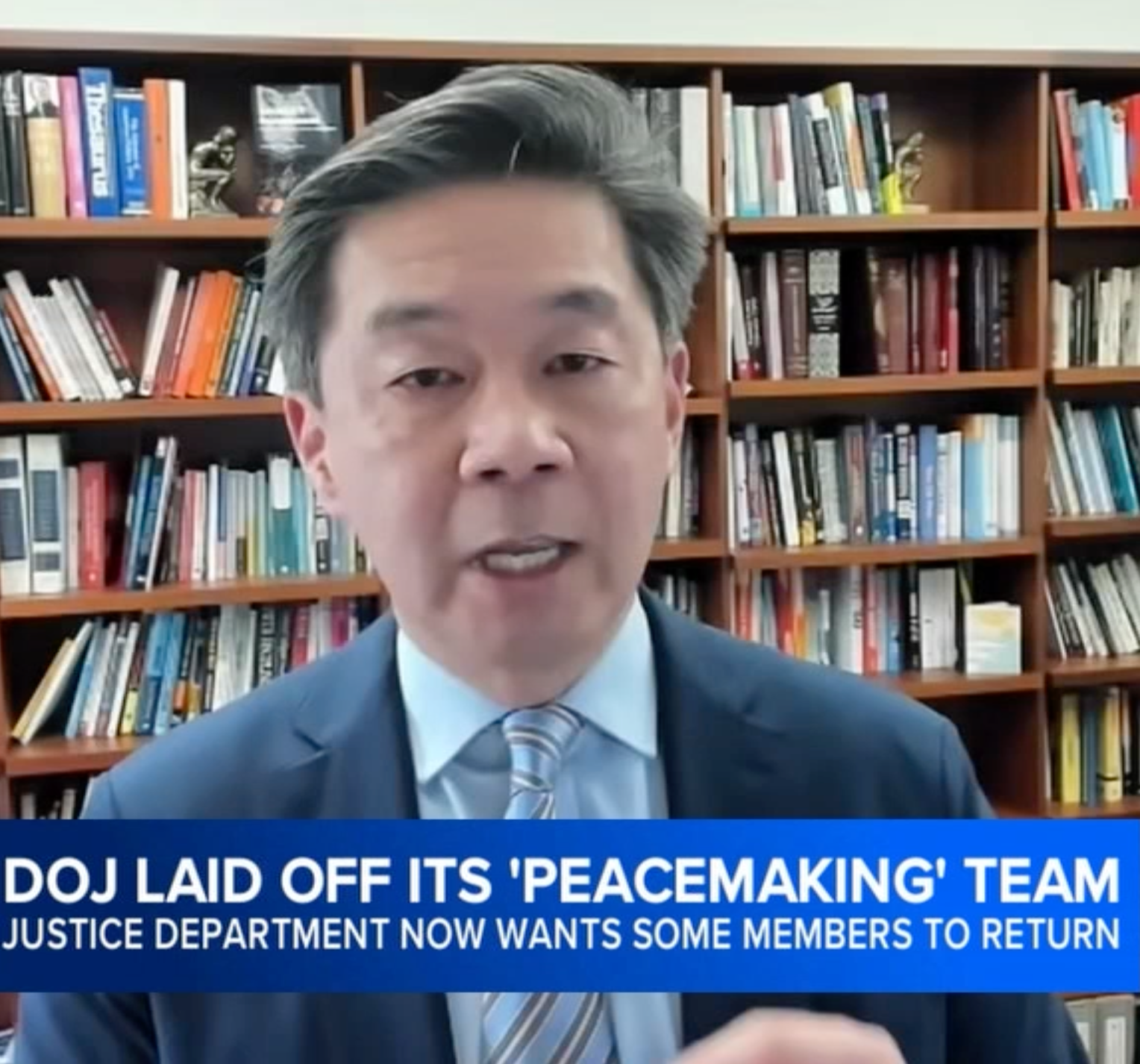
Former CRS Director Grande Lum Speaks to ABC7 Bay Area about the Dismantling of CRS
Grande Lum, director of CRS in 2012-2017 and the current director of the Gould Center for Conflict Resolution at Stanford Law School, spoke with ABC7 Bay Area’s Kristen Sze about the elimination of CRS on January 14, 2026. Lum talked about how CRS’s mediation and conciliation work would have helped with de-escalation of conflicts as protests and civil unrest in response to the federal government’s aggressive immigration enforcement work throughout the United States. The video of the interview is 6 minutes and 20 seconds long.
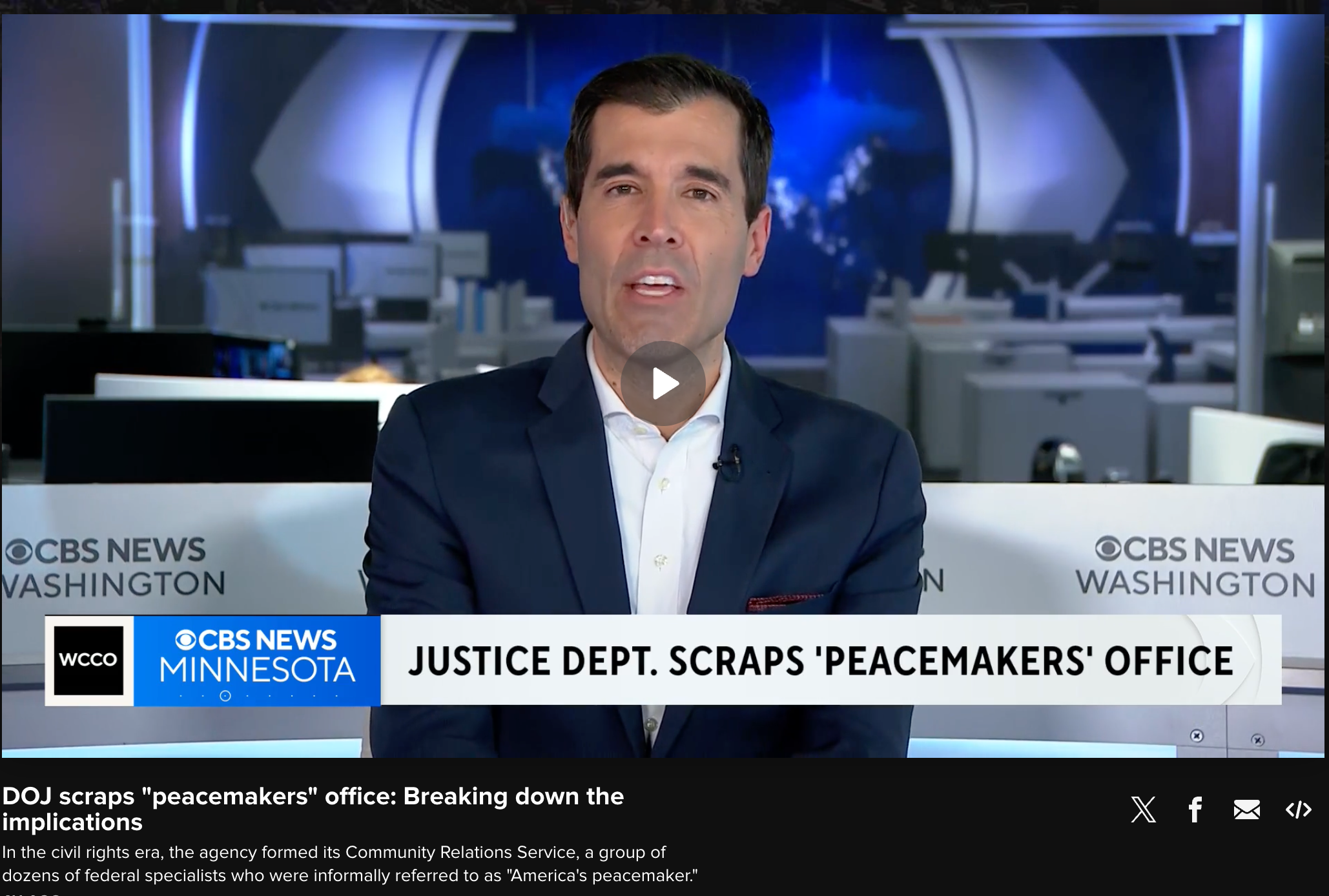
CBS News Highlights DOJ’s “Missed Opportunity” in Closing CRS as Protests Widen Across the Nation
"Talk about some terrible timing," said Scott McFarlane of CBS News on WCCO, a CBS station in Minnesota, as he reported on the shuttering of CRS on January 12, 2026, as protests against ICE’s aggressive enforcement actions escalated across the U.S. "Any number of former Justice Department officials will say this is a missed opportunity," MacFarlane continued in the 3 minute, 14 second segment. "This is a problem that could bear itself out not just in our area, but in cities nationwide in the years to come."
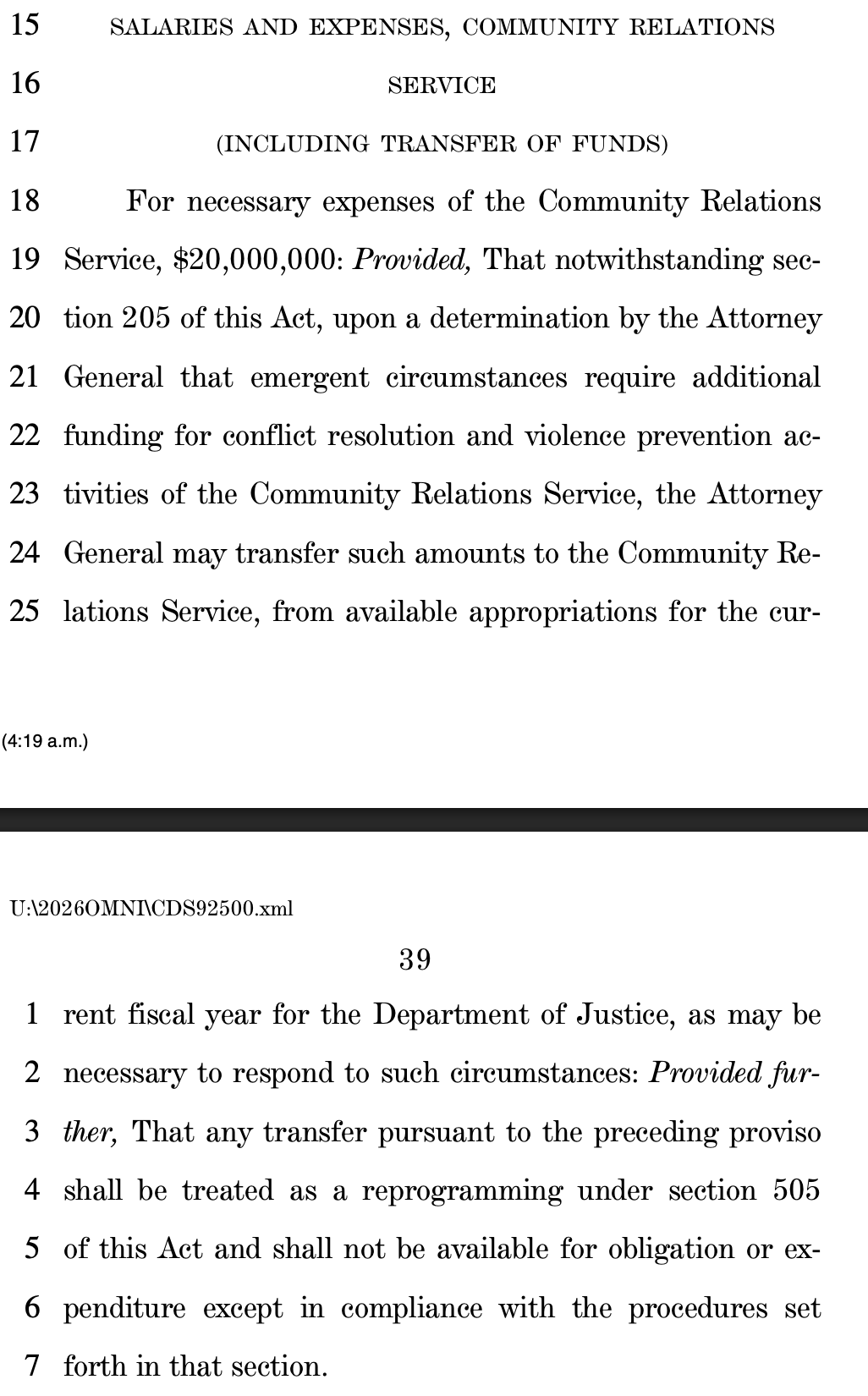
“Breakthrough” FY 2026 Justice Department Funding Bill Includes $20 Million for CRS
Congressional appropriators released today a FY 2026 funding bill for the U.S. Department of Justice that includes $20 million for CRS. This bill is expected to be voted by the House of Representatives this week.
It remains critically important that CRS be fully funded and staffed as a separate, stand-alone agency within the Justice Department, so that CRS can fulfill all of its statutory functions.
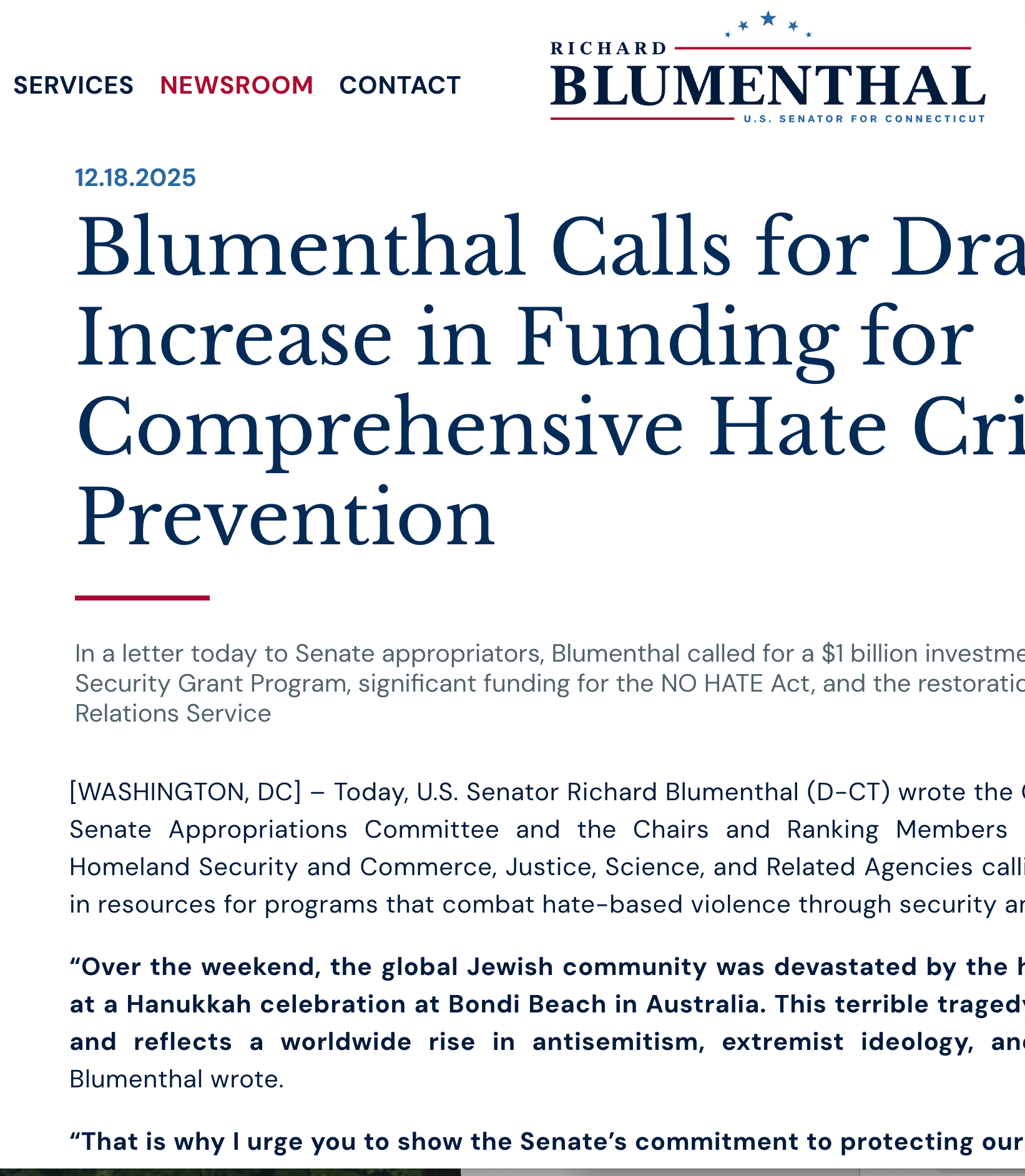
Senator Blumenthal Calls for Restoration of CRS
In a December 18, 2025 letter to Senate appropriators, Senator Richard Blumenthal called for CRS’s restoration, urging his colleagues to show the Senate’s commitment to protecting our religious institutions and minority communities by reestablishing and fully funding CRS.
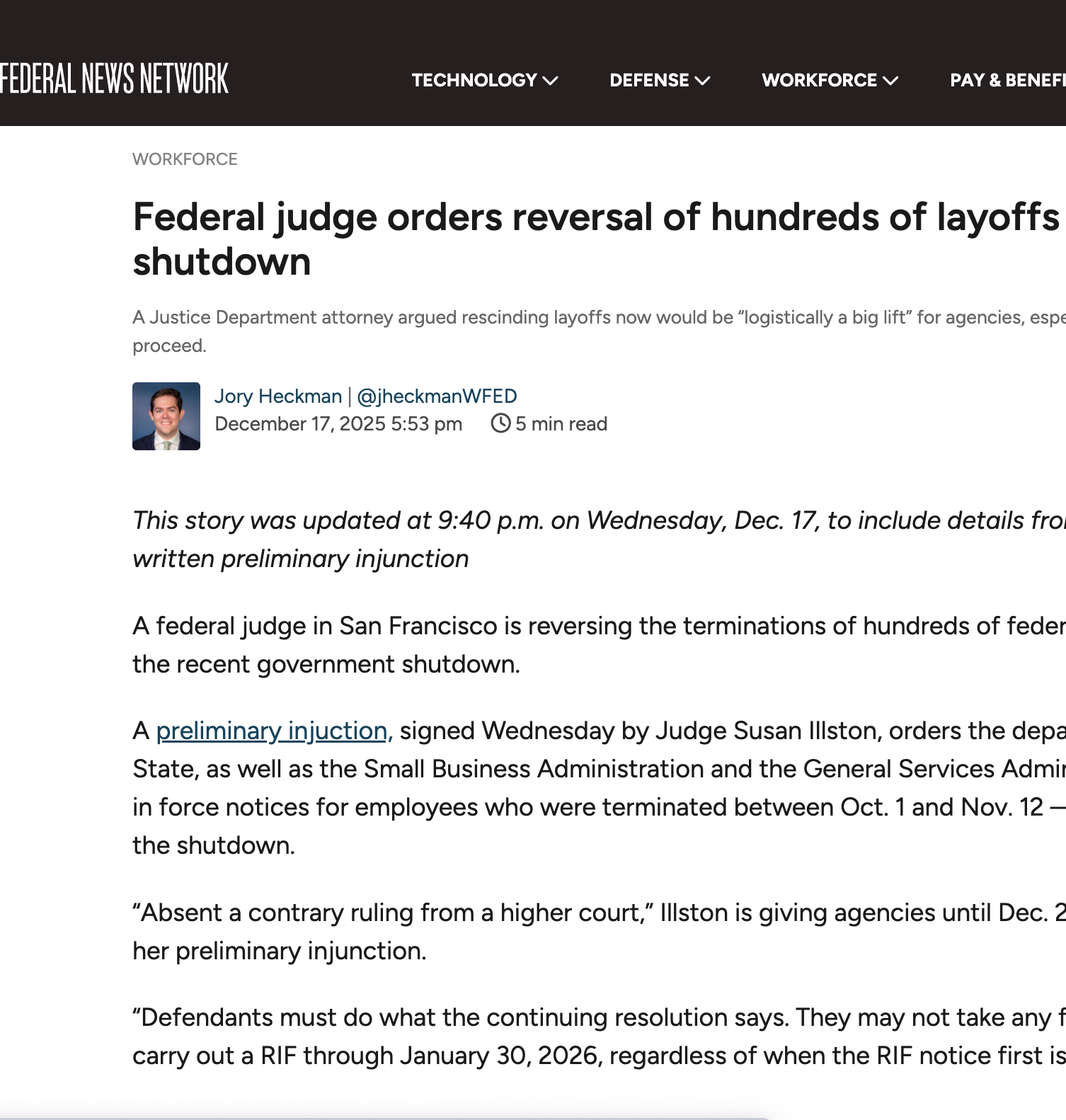
Federal Judge Orders Reinstatement of Employees RIF’d by Four Agencies During Shutdown
A federal judge in San Francisco has reversed the terminations of hundreds of federal employees finalized during the government shutdown between October 1, 2025 and November 12, 2025, the Federal News Network reported on December 17, 2025.
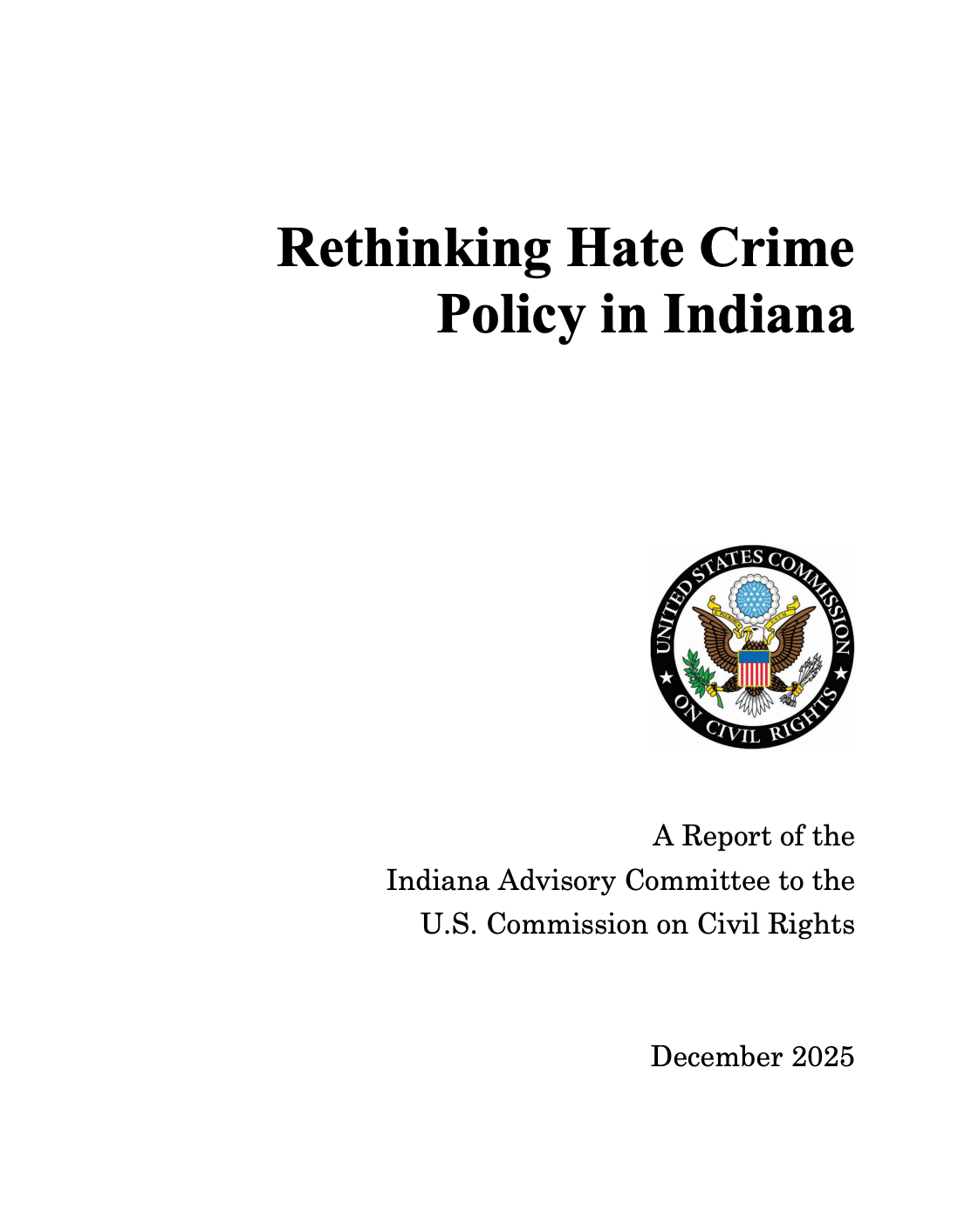
U.S. Commission on Civil Rights’ Indiana Advisory Committee Recommends Restoration of CRS’s Full Funding to Combat Hate Crimes
Today, the Indiana Advisory Committee to the U.S. Commission on Civil Rights called for Congress to “fully fund” CRS and for the Department of Justice to “restore funds appropriated” to CRS.
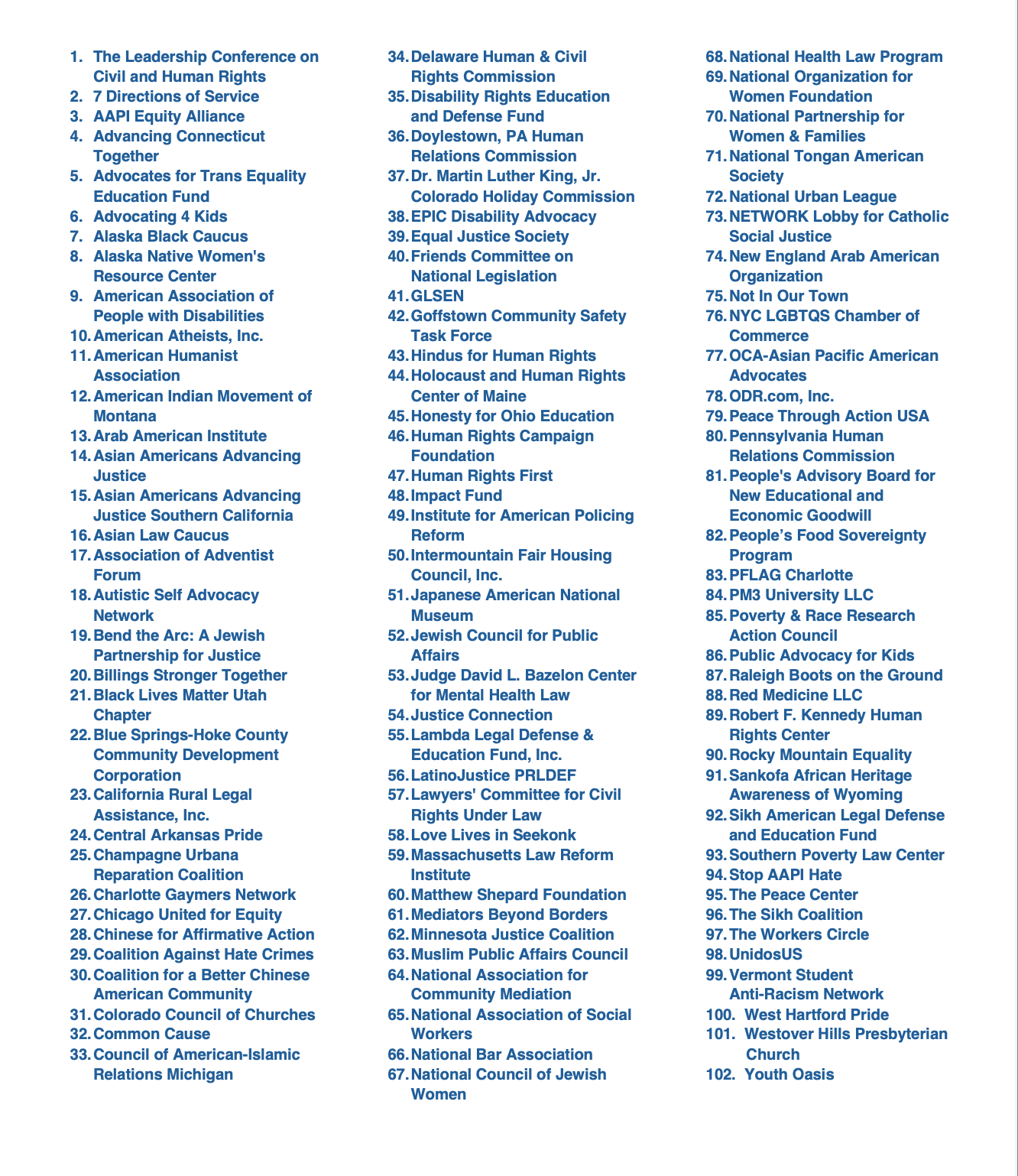
Coalition of 102 Civil Rights and Community Groups Urges Federal Court to Halt Justice Department’s Unlawful Elimination of the Community Relations Service
The Leadership Conference on Civil and Human Rights and 101 additional civil rights, faith, education, disability rights, and community organizations today filed an amicus brief in a Boston federal court—urging the court to grant a preliminary injunction blocking the unlawful shuttering of CRS
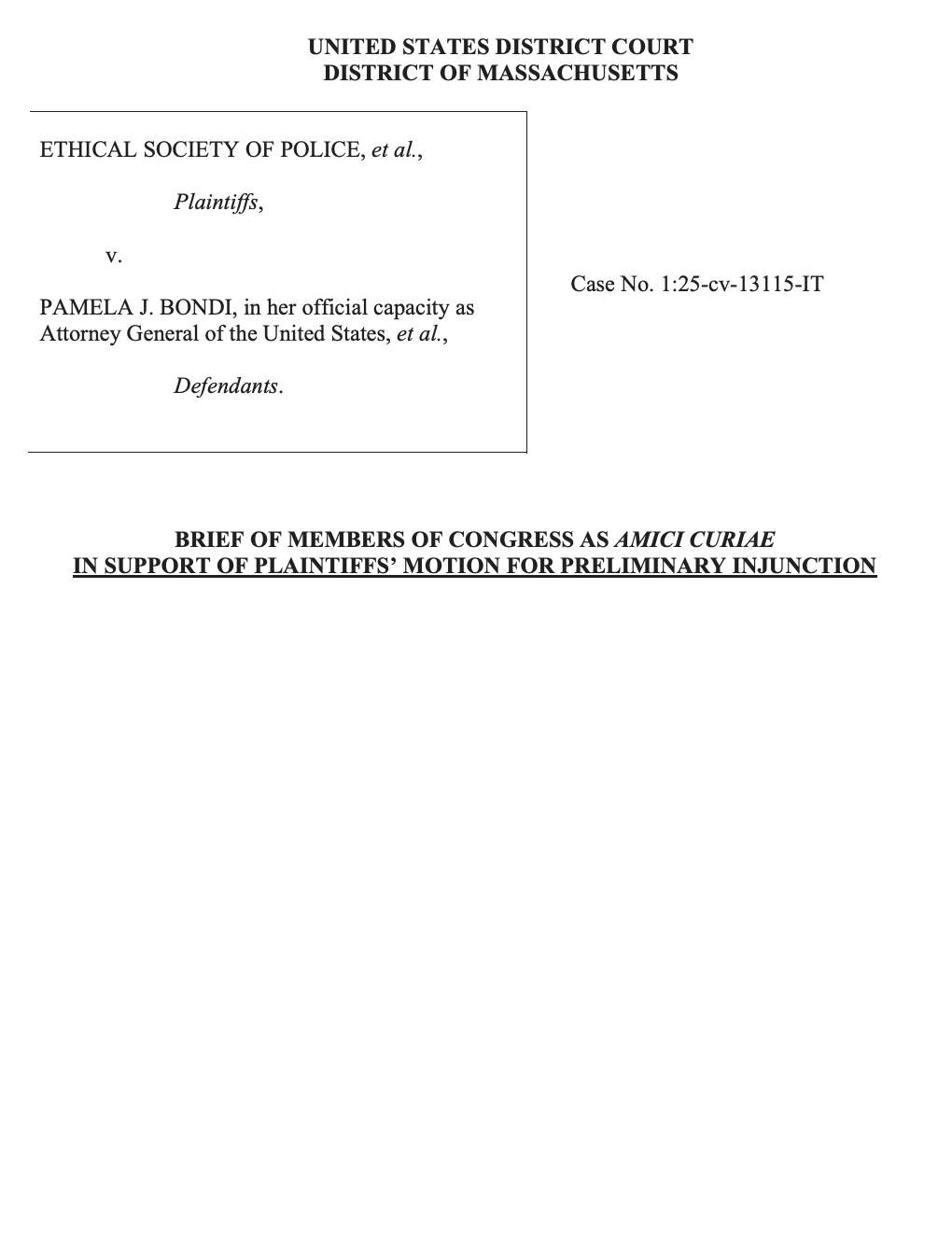
90 House Members, Led by Rep. Raskin, File Amicus Brief Decrying “Lawless Attempt to Shutter” CRS
Rep. Jamie Raskin, Ranking Member of the House Judiciary Committee, led 90 House Democrats in opposing the Trump Administration’s lawless effort to eliminate CRS.
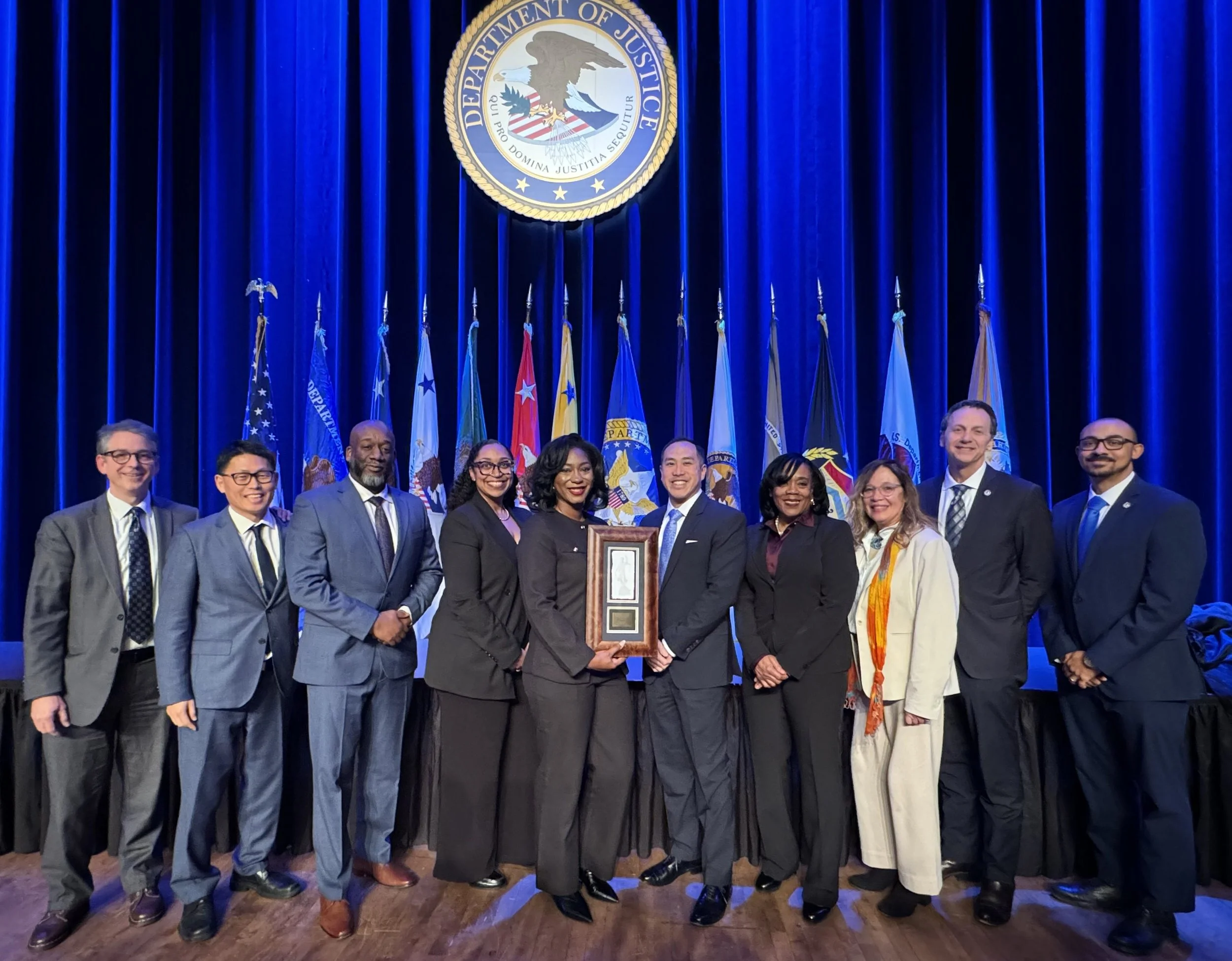
Former CRS Directors Call for “Tough” Congressional Inquiry into Dismantling of CRS
Former CRS directors Becky Monroe, Grande Lum, and Justin Lock published a Justice Connection article, urging Congress to “ask tough questions, press the Justice Department for details, hold hearings,” and “restore a strong CRS.”

“CRS Did the Impossible. Now It Is Gone. Can Anyone Else Fill Its Shoes?”
In a powerful substack post, Heidi and Guy Burgess offer a compelling narrative of CRS’s historical contributions to America, why its closing matters, and what the Burgesses, the Civil Rights Mediation Oral History Project, and the Divided Community Project are doing to keep alive CRS’s institutional and experiential memory.